
Have you ever stopped to think about where the food you eat comes from? Or where the air you breathe comes from? If you said “plants,” then you’re right! But do you know how plants are able to make their own food and oxygen? It’s all thanks to a process called photosynthesis..
https://sciences4kids.science.blog/2023/01/04/seperation-techniques-in-science/
So, what exactly is this photosynthesis?
Photosynthesis is a process that happens in plants and some other microorganisms that helps them turn sunlight into food and oxygen
It is a bit like a factory, where the plant takes in raw materials (like water and carbon dioxide) and uses them to create something new (like glucose and oxygen). Without photosynthesis, we wouldn’t have any plants or oxygen to breathe!
How does photosynthesis work?
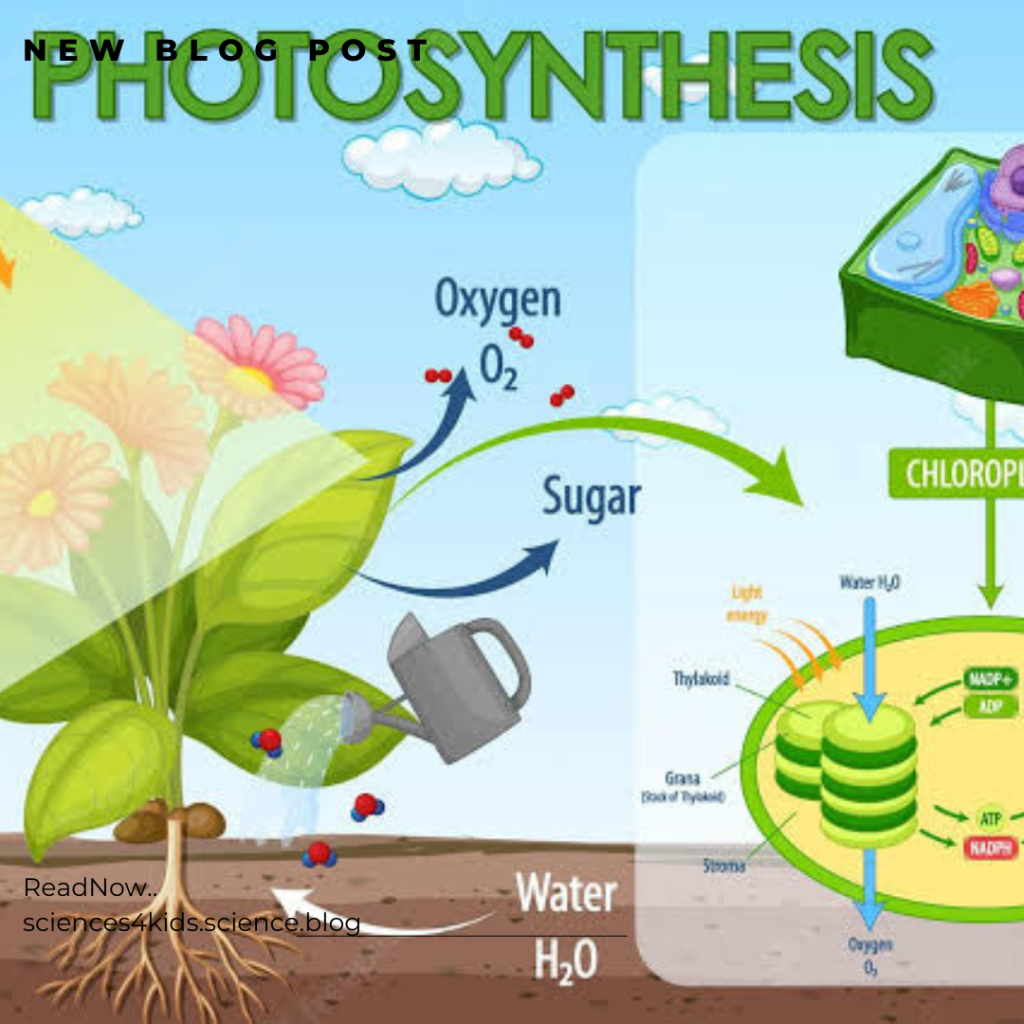
Inside a plant, there are special cells called chloroplasts. These chloroplasts contain green substances called the chlorophyll, which helps them capture sunlight.
When sunlight hits on the chlorophyll, the plant is able to use the energy to turn water and carbon dioxide into glucose and oxygen. Then, the glucose is used by the plant as energy, and the oxygen is released into the air for us to breathe! Isn’t that amazing!
Photosynthesis can be broken down into two main stages which are the light-dependent reactions and the light-independent reactions.
The light-dependent reaction takes place when the plant captures enough sunlight and converts it into energy.
This energy is then used to power the light-independent reactions, also known as the Calvin cycle. During the Calvin cycle, the plant uses the energy from the light-dependent reactions to turn carbon dioxide into glucose.
Factors affecting photosynthesis
There are a few things that can affect the rate at which photosynthesis happens in a plant.
Light
One of the most important is light.
Plants need plenty of sunlight to do photosynthesis, so if a plant is in a place that doesn’t get a lot of sunlight, it might not produce as much glucose.
Temperature
Temperature and water can also affect photosynthesis. If it’s too hot or too cold, or if a plant doesn’t have enough water, it might not be able to do photosynthesis as efficiently.
Photosynthesis is important for a lot of reasons. One of the most obvious is that it helps plants make their own food. But it is also important for us humans and other animals!
Plants produce oxygen as a byproduct of photosynthesis, and we need oxygen to breathe and stay alive. So, without photosynthesis, we wouldn’t have any plants or oxygen!
Many animals, including humans, get energy from eating plants. When we eat a carrot, for example, we are getting energy from the glucose that the plant made through photosynthesis. But plants aren’t the only source of food for animals. Some animals, like cows and sheep, eat plants and then produce milk. The milk we drink comes from the energy the animals got from eating the plants, which got their energy from photosynthesis. Biomass and biofuels are also made from plants, and they rely on photosynthesis to produce energy.
Photosynthesis is a pretty amazing process, and it is important to remember how much we rely on it. Without photosynthesis, we wouldn’t have any plants or oxygen to breathe, and many animals, including humans, wouldn’t have a source of energy. So the next time you see a plant, take a moment to appreciate the role it plays in keeping us all alive!
https://www.dkfindout.com/us/animals-and-nature/plants/what-is-plant/
 Sciences4kids
Leave a comment